.
Some of the most common questions from Salsa students have been about the music – what is Salsa music? Where is the One?? How do I stay on the beat?
The first answer is – go see live music! There is something about music when it is live – when we are in the same room with the instruments, feeling their vibrations of sound. And, it’s also great to see what you are hearing.
If you are here in Santa Fe, every Wednesday evening, La Fonda Hotel hosts an excellent band, Sol Y Soul, in La Fiesta Lounge. This is a great way to sit back, hear some good tunes, and see what each of the musicians are doing. Here is a clip …
Also, taking a moment to learn the Son Clave is very helpful to Salsa dancers. This foundation, or key, of Salsa music, is a syncopated beat, bringing excitement and movement to the music. With an understanding of Son Clave and matching it to the Basic Salsa Step, you will always know where the One is!
And, that’s all it is!
Yet – there is so much more to get to this simplicity …
Before diving into an explanation of the beats of Son Clave and where it matches with the Basic Salsa Step – let’s look at a very brief history of Salsa – most likely you are already familiar with the Son Clave rhythm, as it is found in music of the United States.
The Roots of Salsa
Let’s go back to the early 1800’s, to the eastern end of the island of Cuba, in Baracoa – known for white sand beaches and turquoise waters – at a time where the sugar cane refineries and rural areas were mostly populated with the people of Sub-Saharan Africa, forced into labor, yet permitted to continue their music.
It was here that Changüì emerged, a blend of Spanish guitar and melodies, and African rhythms and percussion instruments. In the late 1800’s, in the hills of Santiago de Cuba, Clave was added, echoing the African concept of call-and-response. And this new sound was called Son.
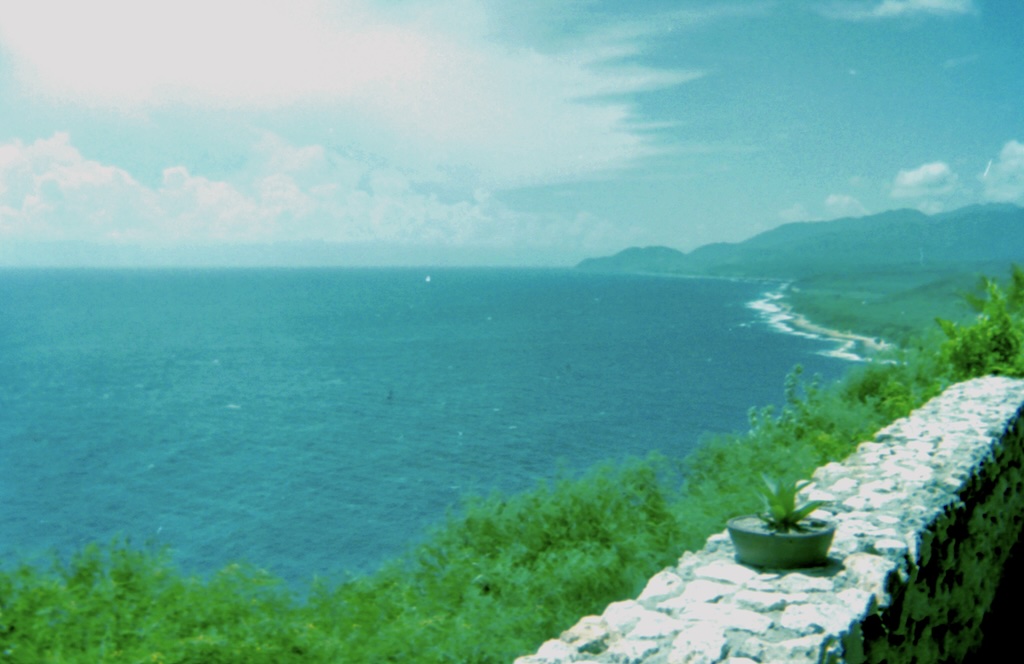
Son traveled through the island and was further developed in Havana by Ignacio Piñeiro, who wrote Èchale Salsita in 1930, believed by many to be the first Salsa song – the phrase being first used when he called out to the band “¡Salsa!” encouraging the musicians to put more spice into the playing – to heat it up for the dancers.
The Son Clave in the United States
The link takes you to a playlist of the music listed here.
The Son Clave moved through New Orleans, influencing Jelly-Roll Morton (New Orleans Blues 1923) and later it became Bo Diddley’s signature sound (Diamond Ring 1955). It was brought to Mexico by Perez Prado (Mambo No. 5 1949), and traveled up into New York’s Harlem where Mambo was mixed with Jazz, creating the Salsa sound we are familiar with today. A good example to hear the Clave in Salsa is in Ray Barretto’s Acid 1968, released on Fania Records, considered by many to be the label that started Salsa (Fania All Stars 1971).
As Salsa continues to shift and change, through all the years, this Son Clave remains as the foundational sound of Salsa. It is the key, the rhythmic structure under the music.
Clave is also an instrument – a set of two sticks, hit together to make the beat.
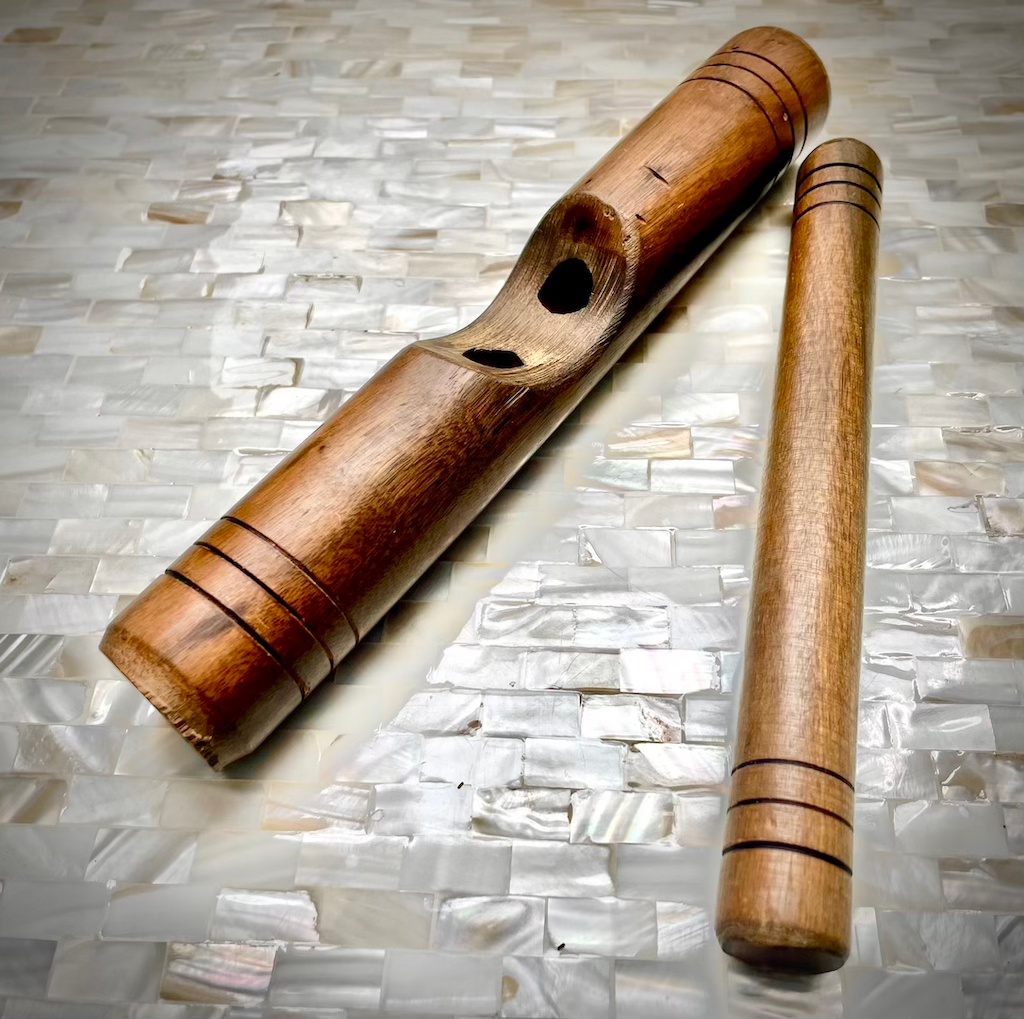
When listening to Salsa, if you don’t hear the the actual instrument, the sound of the two sticks clicking together, you can usually hear the rhythm emphasized in the other instruments – in the melody, or in the punches of the horn section, or in other surprising ways.
Other sounds in Salsa music
Another strong identifier of Salsa music is the conga, the Cuban hand drums, where there is an emphasis of two open tones at the count of “four_and“.
As a Salsa dancer, you may know this as the pause in the Basic Salsa Step, the silent counts of the 4 and the 8.
Of course, there are many other conga rhythms that are played with the advancement of Salsa through the years, though understanding this foundational Son conga sound is a good start.
Other elements of Salsa music would be the montuno of the Piano, and the tumbao of the Base – these being concepts of repetitive rhythm adapted from the Son sound. As Salsa advanced, the tumbao pattern was brought to other instruments, so understanding these rhythms is helpful to identify Salsa.
Also, listen for strong horn sections, and notice the tempo, as Salsa is upbeat, joyful, and can be very fast!
Jazz and Salsa
Finally, understanding the structure of Jazz is helpful when listening to Salsa. In Jazz, songs usually begin with a solid melodic structure, followed by a variety of solos played over the chords of that same structure. You might hear a soloist is coming to the end of their solo with building or repeating sections of the melody to signal the other musicians. Then, the ending of the song is often indicated with the structure of the song that was heard in the beginning. There can be a variety of arrangements based on these concepts.
In Salsa, listen for the excitement of call-and-response sections, where there is a repetitive verse with a response of poetic lyrics, or like in Jazz, there may be soloists trading fours – maybe you’ll hear sections of horns and cool riffs repeating sections of the melody or chorus. Though Salsa does not follow Jazz concepts exactly, the arrangements usually have patterns from the beginning sections that repeat throughout the song.
As I became familiar with these patterns and arrangements, understood the history of Jazz and Salsa, learned how the Son Clave and the Son conga rhythm locked with the Basic Salsa Step, dancing became so fun! Somehow it freed me up to play with the Salsa moves, discovering which ones matched the sound of the horn punches, or the rolls of the congas, guessing where the song would go in the moment.
Here is another clip from Sol Y Soul at La Fonda…
They are playing a traditional Cuban song, Guantanamera, arranged with Jazz concepts using a trumpet solo over the changes. Also, do you notice how the piano is playing a repeating pattern? How about the conga’s open tones on the 4_and? After the trumpet’s solo, there is a verse and then they return to the chorus, and the solo pattern will repeat again.
These are the things can be noticed while dancing, and as you pick up on the song’s patterns, you can play with Salsa moves that emphasize the patterns, enhancing your experience, expanding your creativity, and dancing as a part of the band.
For myself as a dancer, there becomes a freedom of expression – of no longer caring what people think, as nothing exists but the joy of being there, hearing the band, the dancers, all the laughter, kindness, and the thrill of moving to the music.
With live music, I find it easier to listen closely – to feel the clave driving my feet – to move with the movements of the music and become a part of the sound, become an expression of the sound, and ultimately come into my own style and goofiness – yes – goofiness – the essence of Mambo.
So, when you are hearing a beat that is inspiring you to get up and dance – go for it – who cares if it isn’t Salsa! Just dance! I haven’t found anybody who is out there, judging – and if by chance they are? Well, that is for them to worry about – not you – because you are feeling it – you are dancing!
How to play the Son Clave
In music, there are repeating rhythmic patterns. And, as a Salsa dancer, you probably first learned the Basic Salsa Step in counts of eight. Then you repeated that group of eight counts over and over.
You are creating rhythm with your movement. A beat, repeated. A movement, repeated. Becoming rhythm.
In the Salsa Basic Step (for Salsa-on-One) the dancers are moving in three beats and pausing on the beat of 4, then move again in three beats and pausing on the beat of 8. This pattern is repeated during the entire dance, no matter how complicated the moves are.
1_2_3_pause_5_6_7_pause_
And, just like the Salsa Basic Step, the Son Clave is in eight beats.
Though, we are going to count that eight beats in a different way – as two sections of four beats. These two sections of four beats are counted like this… say it out loud, in a steady pulse:
one_and_two_and_three_and_four_and_one_and_two_and_three_and_four_and_
You may notice that I didn’t put an indication between the two sections of four counts. This is to emphasize the importance of continuing a steady pulse. Any pause when going into the next section of numbers would throw off the rhythm.
Once you got that, let’s add clapping. Where there is a bold on the word, that is where you clap. Still continue saying each word and number out loud in the steady pulse, and clap when you see the bold. Try it…
one_and_two_and_three_and_four_and_one_and_two_and_three_and_four_and_
Didn’t get it? Not to worry at all! It takes time and patience and kindness to yourself.
Call and Response of the Clave
Here is another way to look at this pattern – do you recall when I talked about the call-and-response pattern of African rhythm? By seeing this pattern as two sections for four, with the Call being the first section of four with the 3 hand claps, and the Response being the second section of four with the 2 hand claps, it might make more sense.
And the key? Go very slow at first. Break down areas that are difficult. Be patient. It can twist and turn and easily get jumbled up – our brain can do funny things when studying rhythm!
And, when you get there… guess what? …
… we are going to “reverse” it!
How to play Son Clave Reversal
With the first section as the 3 side, and the second section the 2 side, the Son Clave is also called the 3-2 Clave. Switch the two sections around, where the 2 side is played first, and the 3 side played second.
And, there you go – this is the more modern use of this Son Clave pattern heard in Salsa, often referred to as the Son Clave Reversal, or the 2-3 Clave. Try this…
one_and_two_and_three_and_four_and_one_and_two_and_three_and_four_and_
Son Clave and the Basic Salsa Step
For music using the Son Clave Reversal, when you hear the beats of two_and_three, they match with the steps of 2_3 of the Salsa Basic Step.
For music using the Son Clave, the beats of two_and_three match with the steps of 6_7.
And, this is how a dancer can keep with the beats, and not get lost. You will know where the One is, as you are hearing the Clave, the pulse of the song, and other instruments will be emphasizing the downbeat, the One.
Of course, while dancing and goofin’ – yes, goofin’ – it is easy for me to get lost. What to do?? Do I panic? Do I wonder if everyone is noticing? Nope. I listen to the music. I laugh. I emphasize some cool other beats I am hearing with my shoulders. I maybe do some random turn, some silly movement. And, all the while, I am listening for that Son Clave, and when I finally hear it again, I get back to my Basic Salsa Step. All the while having a great time.
Son Conga Pattern
This can very helpful to dancers, too. You may notice that this pattern is repeated in both the sections of four. Depending on the song and the musician, a variety of rhythms could be played – yet, having an open tone on the four_and is the most basic Son conga pattern. In the Basic Salsa Step pattern, this open tone matches with the pause on the 4 and the 8.
one_and_two_and_three_and_four_and_one_and_two_and_three_and_four_and_
And this conga pattern along with the Son Clave will help the dancer to find the One, and stay on the beat.
Here is a link to another Youtube playlist with some songs that have helped Level 1 dance students hear the Clave and other elements of Salsa. The first songs are slower and though Salsa is usually pretty fast, using these slower songs can be good for learning how the Basic Salsa Step matches with the Clave or other elements of the Salsa sound.
Here in Santa Fe, there are many opportunities to listen to live music. I try to keep up when bands play in town for Salsa dancers, and list them on the Local Salsa Dancing page…
So, go and explore – find the One in all your favorite music! Try to find Clave in any music, feel the pulse, and soon you will recognize this Son Clave beat everywhere!
¡Suave con Fuerte!
By Marie Maez, Director, Salsa Santa Fe, October 26, 2025
 Salsa Santa Fe